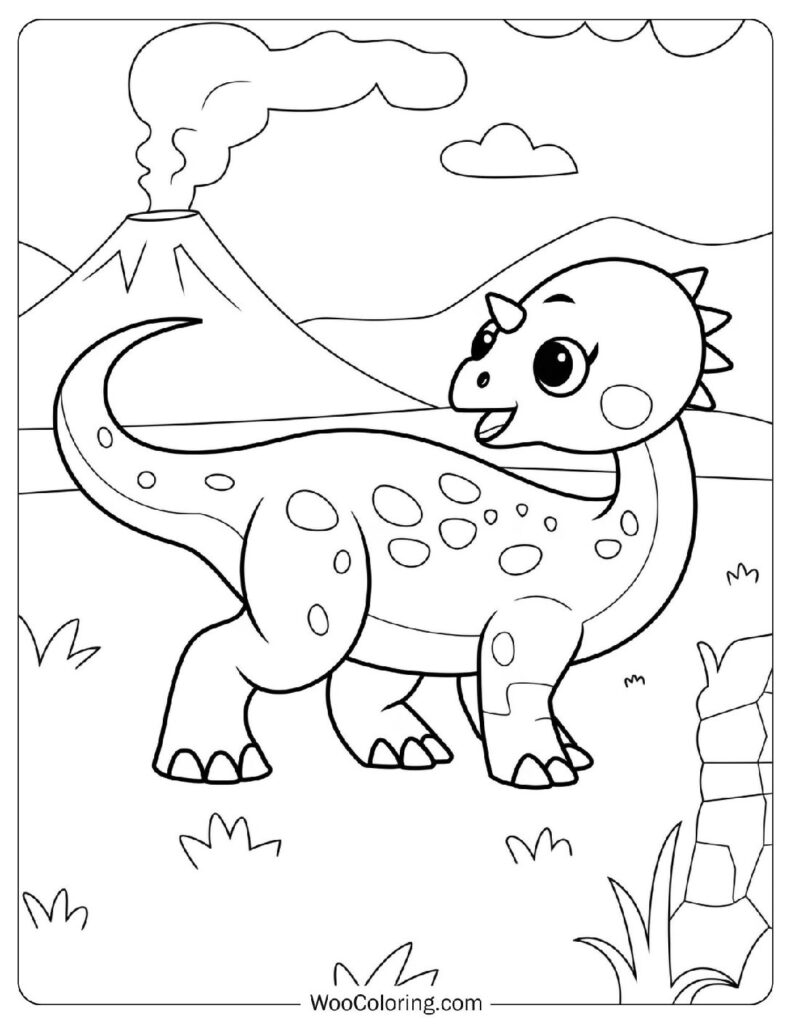
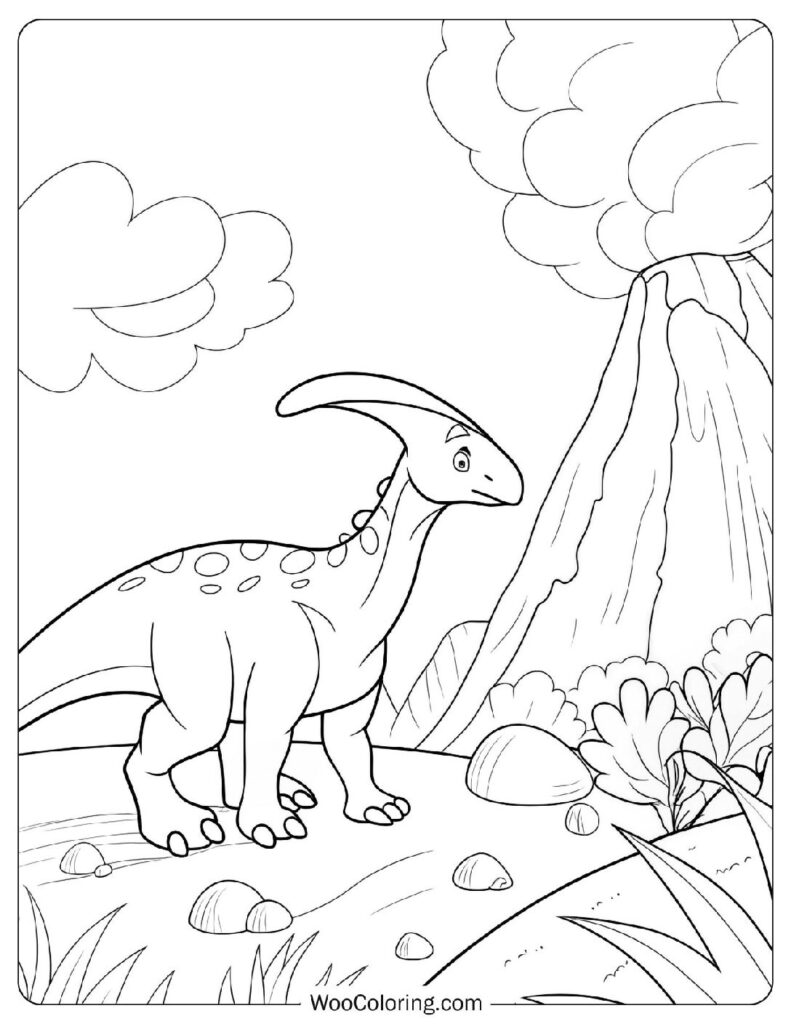
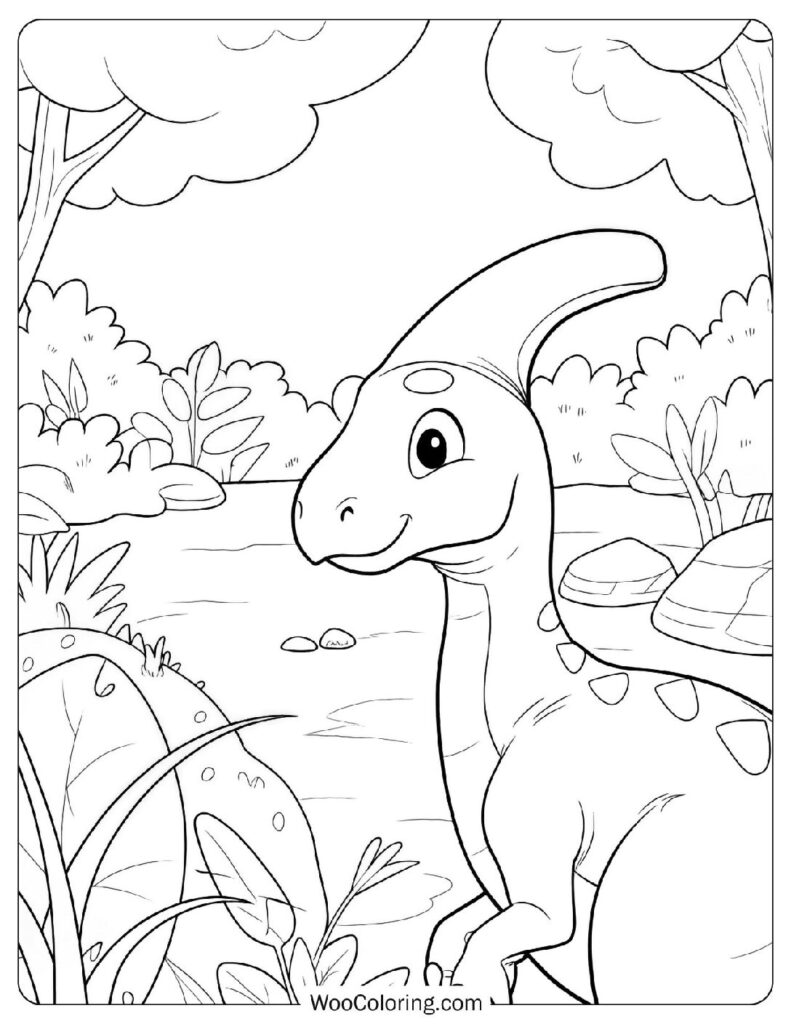
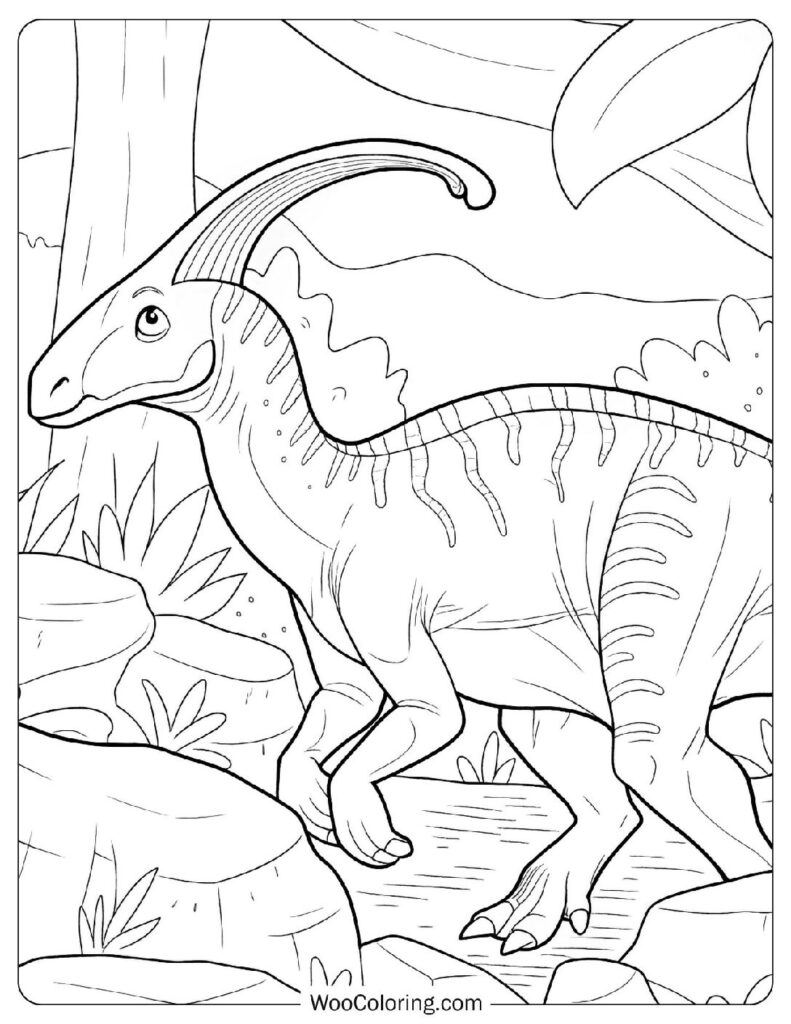
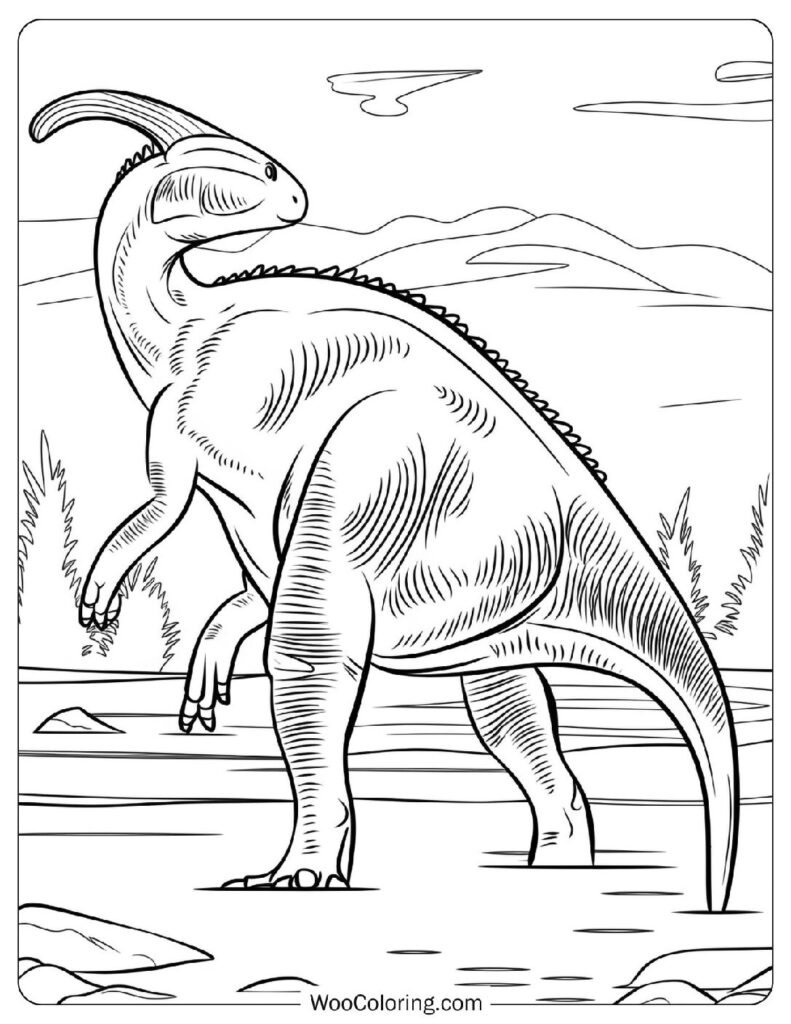
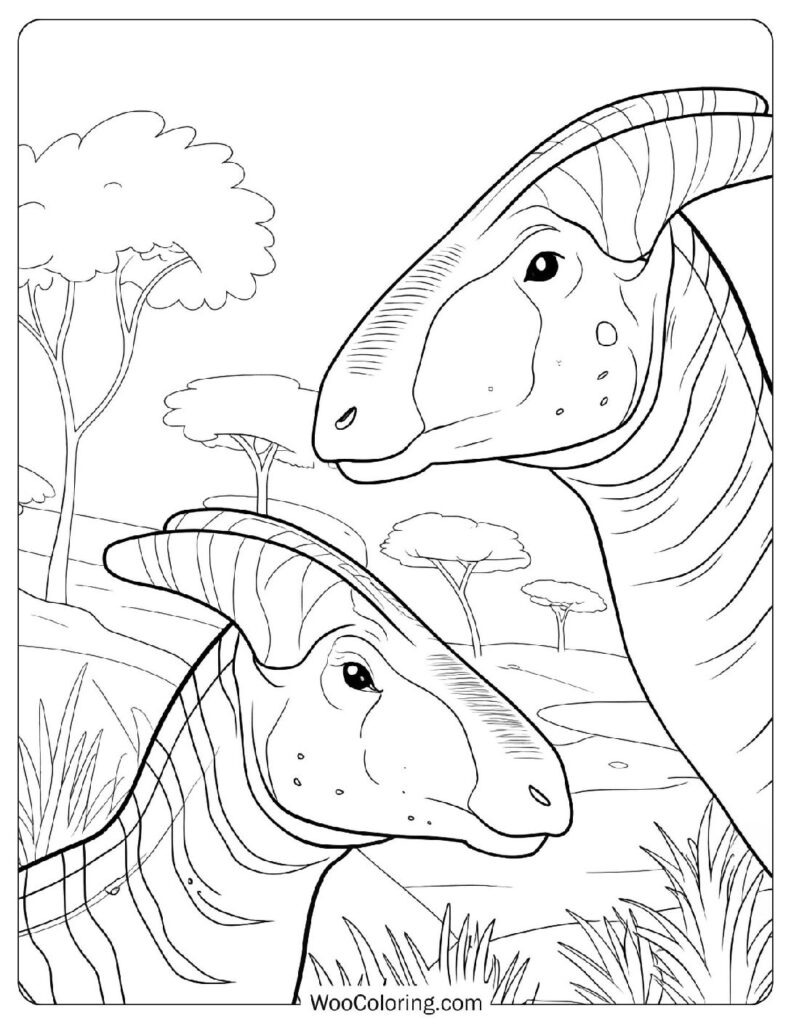
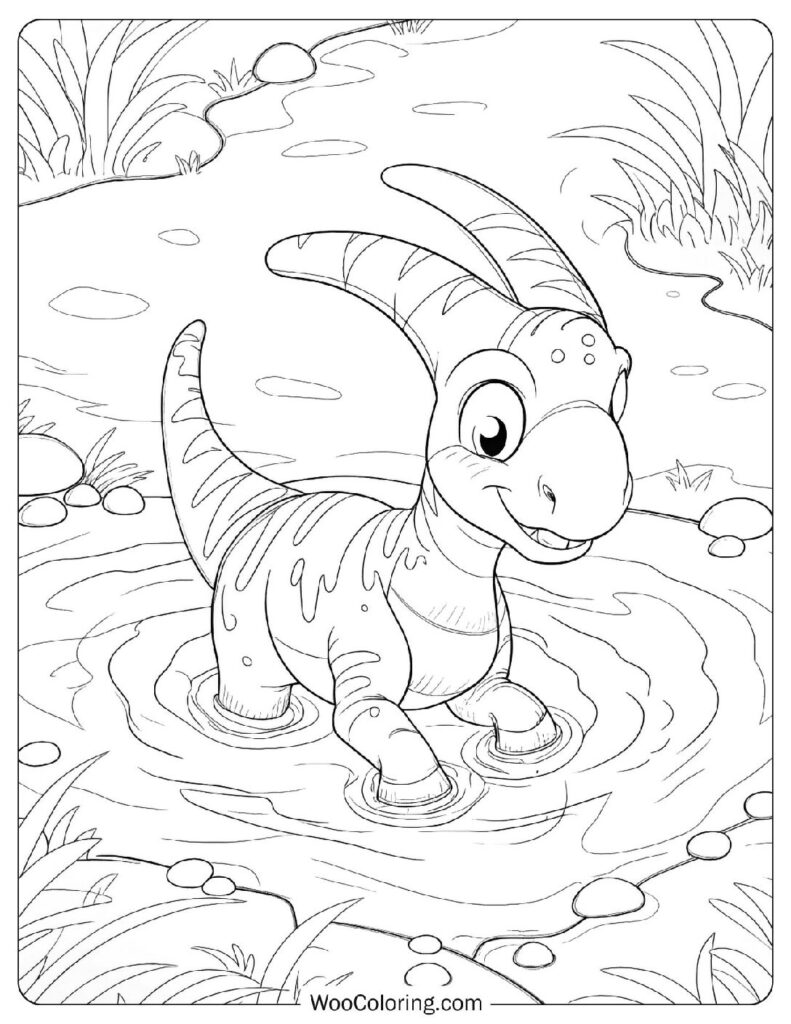
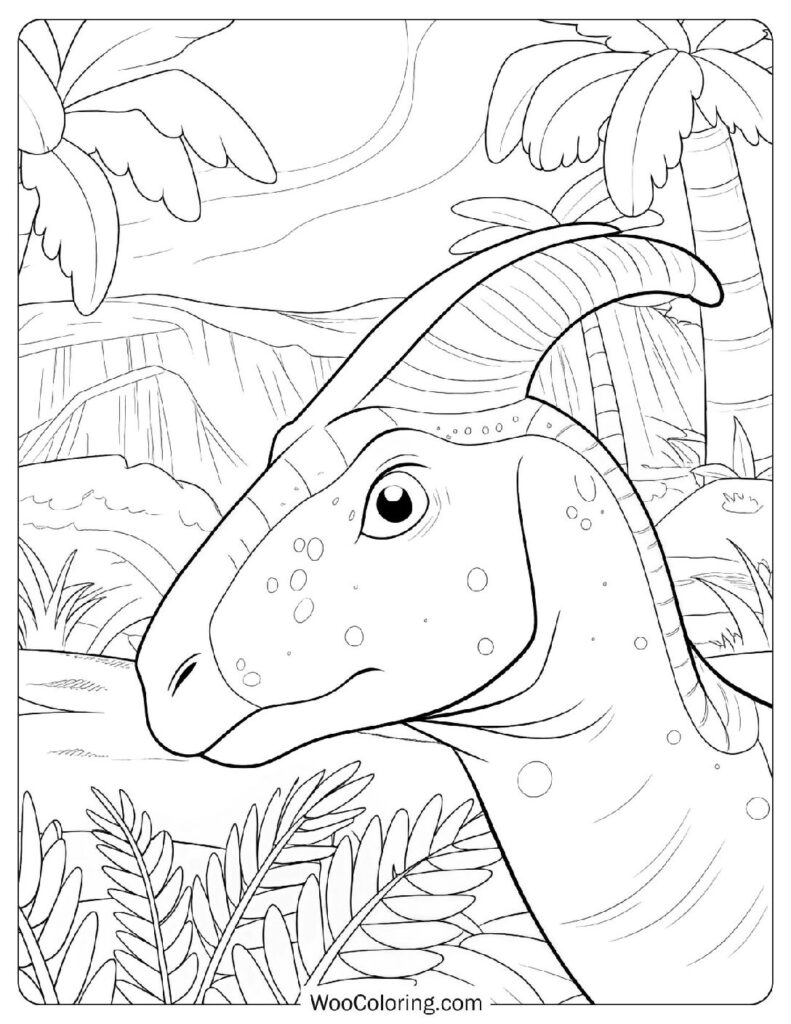
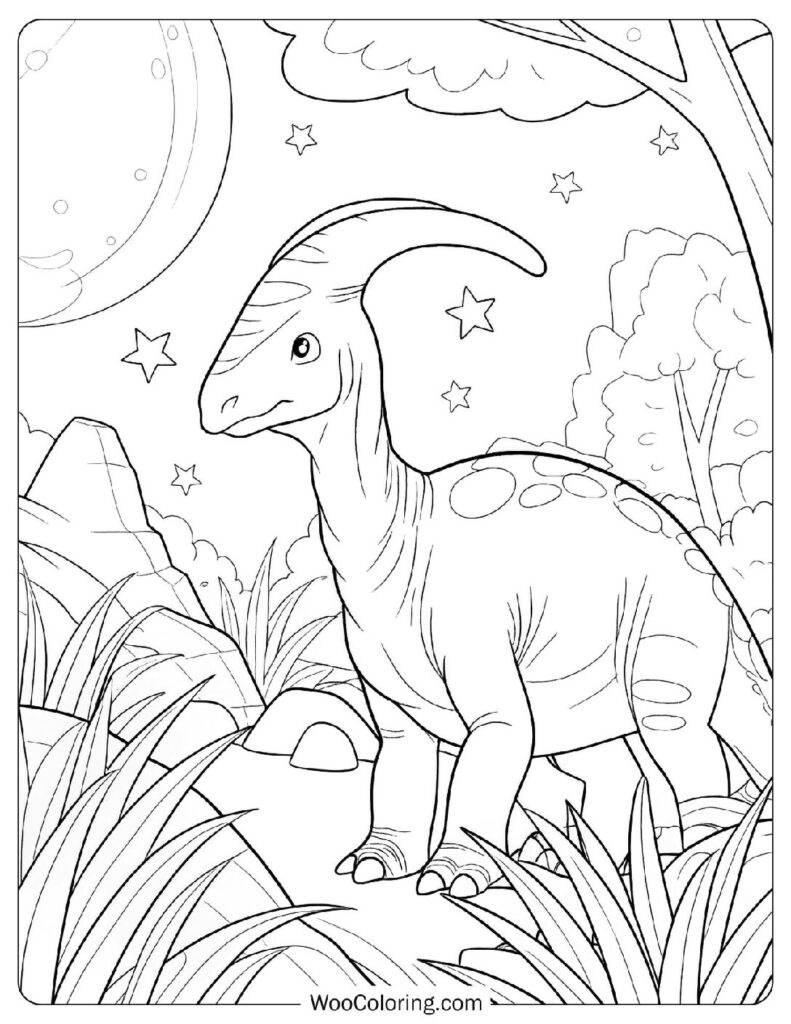
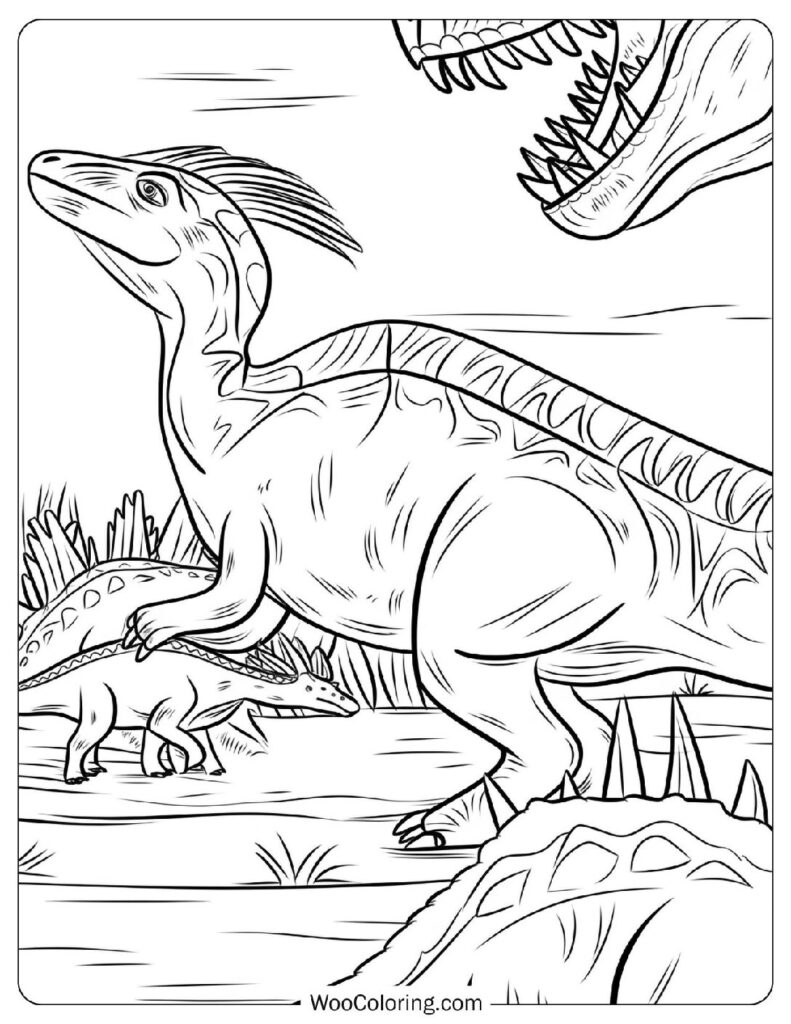
The versatility of these coloring activities is a blast! You’ll find characters like the adorable Baby Parasaurolophus Exploring the World and a Realistic Parasaurolophus in Detail that adds realism to your masterpiece. There’s even a Parasaurolophus and a Volcano Scene for adventurous themes and the Jurassic World Parasaurolophus Adventure that sparks the imagination! These pages promise hours of joy and creativity. These Parasaurolophus coloring pages are designed to fit standard US letter-sized paper, making them convenient to print. I’m excited to share that I regularly update the list of free coloring sheets with new designs, so keep an eye out for more fun options!
Cute Parasaurolophus Coloring Page Drawing: Step-by-Step Guide
Drawing a Cute Parasaurolophus is a delightful way to express creativity in the world of dinosaurs. This guide provides a straightforward approach to crafting your very own Cute Parasaurolophus coloring page. Whether you’re just starting out or have some experience, following these steps will make your drawing process enjoyable and rewarding. With its unique features, the Parasaurolophus is an interesting subject that is perfect for creating personalized art. Let’s dive into the fun of making your own drawing collection! Are you searching for even more exciting coloring activities that kids adore? Explore these popular collections of free printable coloring pages for endless fun and creativity!
Drawing Instructions
Sketch the Head Outline
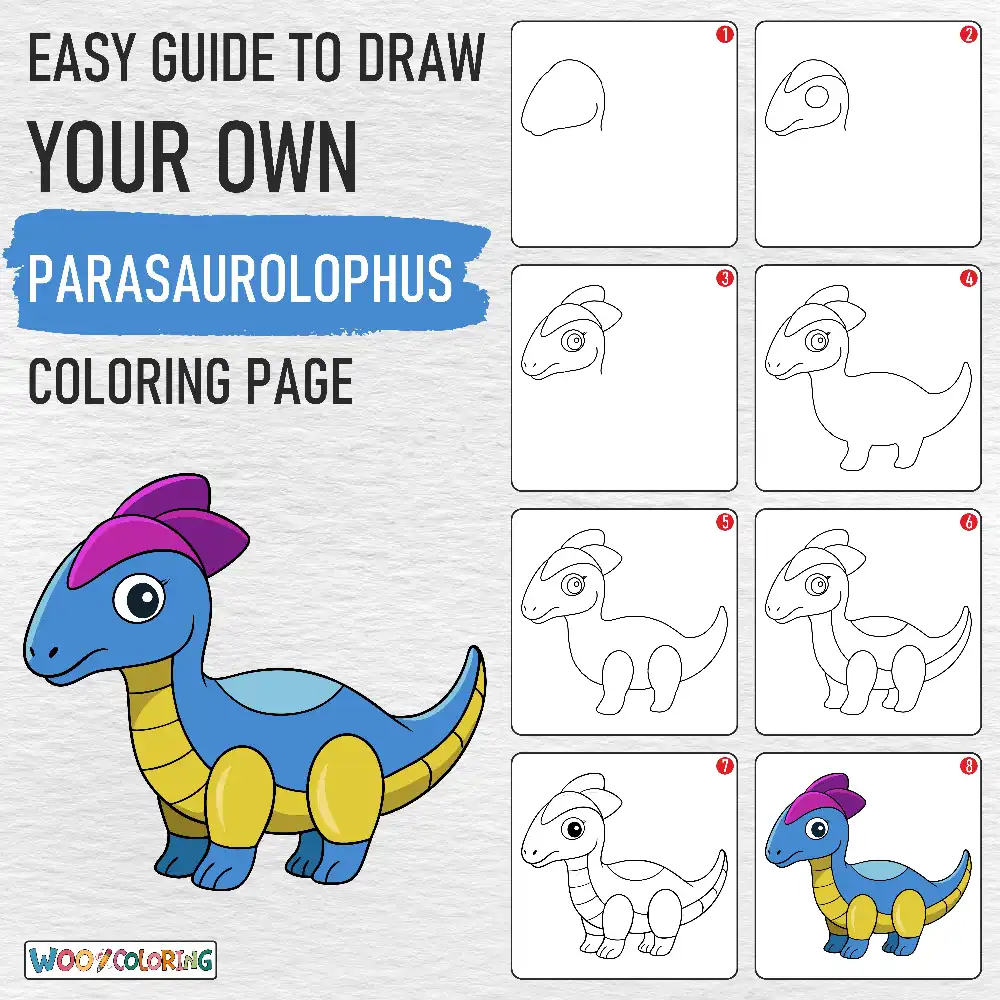
Start with the shape of the head as illustrated in image 1. Draw a rounded shape for the head, slightly flattened at the top to represent the distinctive skull of the Parasaurolophus. Make sure the lines are light, allowing room for adjustments later. Keep in mind the proportions; the head should be larger relative to the body to capture that cute essence. Focus on getting the silhouette right, as this will be the foundation for the rest of the drawing.
Add Basic Facial Features
In image 2, I focus on adding the key facial features. Begin by sketching a large circular eye towards the upper front of the head. Then, add a small curve for the mouth and a few details to define the nose. Make sure to retain the cartoonish charm by keeping the features simple and exaggerated. At this stage, don’t worry about small details; just aim for a friendly and approachable face that embodies the cute qualities of the Parasaurolophus.
Draw the Unique Crest
Look at image 3 to add the iconic crest on top of the head. This is a prominent characteristic of the Parasaurolophus. Draw two curved shapes that mimic waves, starting from the back of the head and extending outward. Ensure the crest is noticeable but retains that cute aesthetic. It’s essential to capture the playful nature of your Parasaurolophus, so feel free to add extra curves that enhance its whimsical appearance.
Outline the Body and Tail
Next, refer to image 4 for the body structure. Draw a rounded body that connects seamlessly to the head. The body should be plump and charming to keep the appeal of a Cute Parasaurolophus. From the body, extend the tail with a gentle upward curve. This gives an animated pose, conveying a sense of joy. Ensure that the proportions of the body align well with the head for a cohesive design.
Add Limbs and Feet
Now, it’s time to include the legs as demonstrated in image 5. Sketch each leg with rounded shapes, making sure they look sturdy enough to support the body. The feet should be slightly wider than the legs to give that cartoonish, cute feel. Don’t forget to add small details like toes, enhancing its playful look. Position the legs to create a sense of movement, as if the Parasaurolophus is ready to embark on a fun adventure!
Define the Final Outline
Refer to image 6 for refining your drawing. Go over the main outlines with a bolder pen or marker, ensuring that each section stands out. Clean up any unnecessary lines and smooth out the contours. This step is crucial to give your artwork a polished look while maintaining the overall playful quality of your Parasaurolophus. Double-check that all parts of the drawing are well-defined and recognizable.
Add Stripes and Patterns
In image 7, I show how to incorporate fun details like stripes across the back and belly. Add curved lines or patterns that mimic the look of scales or textures. These design elements make your Parasaurolophus more visually interesting and unique. Play with the thickness of the stripes to create variation and depth. This is your chance to be imaginative and personalize your drawing!
Color Your Parasaurolophus
Finally, take inspiration from image 8 to add color to your Parasaurolophus. Use a mix of blues and yellows, and maybe add a pop of pink for the crest to make it stand out. Focus on blending colors gently for a smooth transition, especially around the belly area. Consider layering colors for added depth, perhaps darker tones on the top and lighter shades underneath. This will truly bring your Cute Parasaurolophus to life!
Personalize Your Coloring Page
Adding personal touches to your cool coloring page makes it more special. Incorporate background elements like trees or clouds to enhance the scene. You can experiment with different colors to make your drawing unique and fun. Don’t hesitate to try various coloring techniques, such as shading or stippling, to bring depth to your work. By crafting your own coloring book, you can create a delightful collection that reflects your artistic style. Enjoy making your Cute Parasaurolophus come alive through color!
10 Creative Exercises with Parasaurolophus Coloring Pages
Coloring pages featuring the unique Parasaurolophus provide an engaging way to combine creativity and education. As a fan of dinosaurs, I find coloring these detailed pages to be a delightful activity. To enhance the experience, here are ten creative exercises that not only entertain but also help develop various skills. Engaging in these simple yet effective activities can transform a straightforward coloring session into a comprehensive learning opportunity.
1. Create a Dino Story
After coloring in your Parasaurolophus page, write a short story featuring your colored dinosaur. Describe its adventures and interactions with other dinosaurs. This exercise enhances storytelling skills and encourages imaginative thinking. By visually connecting the story to the artwork, children can develop both writing and drawing skills while enjoying a fun backdrop that stimulates their imagination through a simple DIY project.
2. Dino Diorama
Once you’ve colored your Parasaurolophus, create a diorama using a shoebox. Cut out your colored dinosaur, and use natural materials like twigs and leaves for your habitat. This hands-on project encourages creativity and fine motor skills while educating participants about dinosaur environments. Plus, it’s a simple way to engage with art and science by bringing to life a vivid and detailed setting around your dinosaur.
3. Nature Collage
Use your colored Parasaurolophus page as an inspiration for a nature collage. Gather leaves, flowers, and other items from outside. Arrange and glue them around your colored image on a larger sheet of paper. This project encourages creativity and exploration of natural elements, linking art with nature while strengthening fine motor skills and eye-hand coordination through a fun and educational DIY activity.
4. Dino Dance Party
Organize a dino-themed dance party after coloring your Parasaurolophus. Create a playlist of fun, upbeat songs and let everyone dance like dinosaurs! This exercise promotes physical activity and social interaction while celebrating the joy of creativity through the colorful art involved in their coloring pages. It adds a playful touch to art and movement, keeping the atmosphere lively and entertaining.
5. Color Wheel Exploration
Make a color wheel after coloring your Parasaurolophus. Identify colors used in your drawing and mix them to create new shades. This activity helps with color recognition and mixing skills. It’s a simple way to explore color theory while engaging in a DIY project with fun, hands-on exploration. This reinforces artistic understanding while making this coloring project more interactive and educational.
6. Dinosaur Bingo
Turn your colored Parasaurolophus into a DIY bingo card. Draw various dinosaur images, including your Parasaurolophus, on a grid. Use coins or buttons as markers. This fun game sharpens cognitive skills and reinforces dinosaur knowledge while incorporating visuals from the coloring experience. It’s an enjoyable, interactive way to combine learning with play in a simple format that can be enjoyed with friends or family.
7. Create a Puzzle
Transform your colored Parasaurolophus into a puzzle. Once the coloring is finished, glue the page onto cardboard and cut it into various shapes. This activity promotes problem-solving and fine motor abilities while allowing participants to interact with their artwork creatively. The finished puzzle adds an exciting DIY element to their colored art, providing hours of fun as they fit the pieces together.
8. Dino Facts Sheet
After coloring, create a fact sheet about the Parasaurolophus. Write down interesting facts, such as its habitat and characteristics. This exercise helps in research and writing skills while enhancing knowledge about dinosaurs. It’s a great way to combine the enjoyment of art with academic learning, encouraging kids to discover more about the creatures they love through engaging DIY activities.
9. Shadow Play
Use a light source to project shadows of your colored Parasaurolophus onto a wall. Experiment with different distances to see how the shadow changes. This project teaches spatial awareness and light concepts. It’s a unique way to interact with the colored artwork while gaining insights into simple principles of physics, making learning both fun and visually stimulating.
10. Collaborative Mural
Gather with friends or classmates to create a mural featuring your colored Parasaurolophus. Use large paper or a wall to combine everyone’s artwork into a massive dinosaur scene. This collaborative effort fosters teamwork and social skills while providing a fun way to display individual creativity. The result showcases everyone’s unique style, turning a simple coloring page into a striking, detailed collaborative art project.